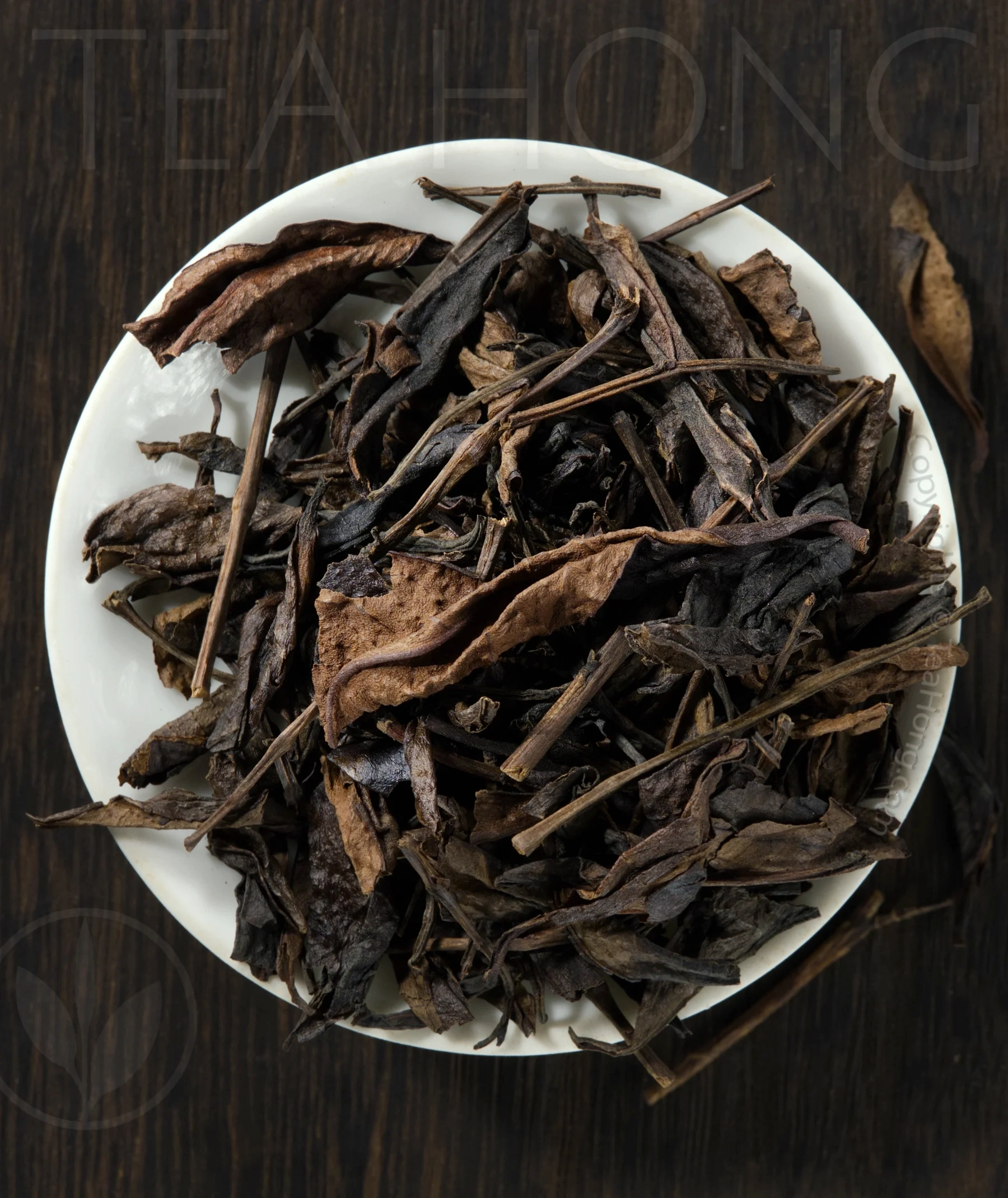
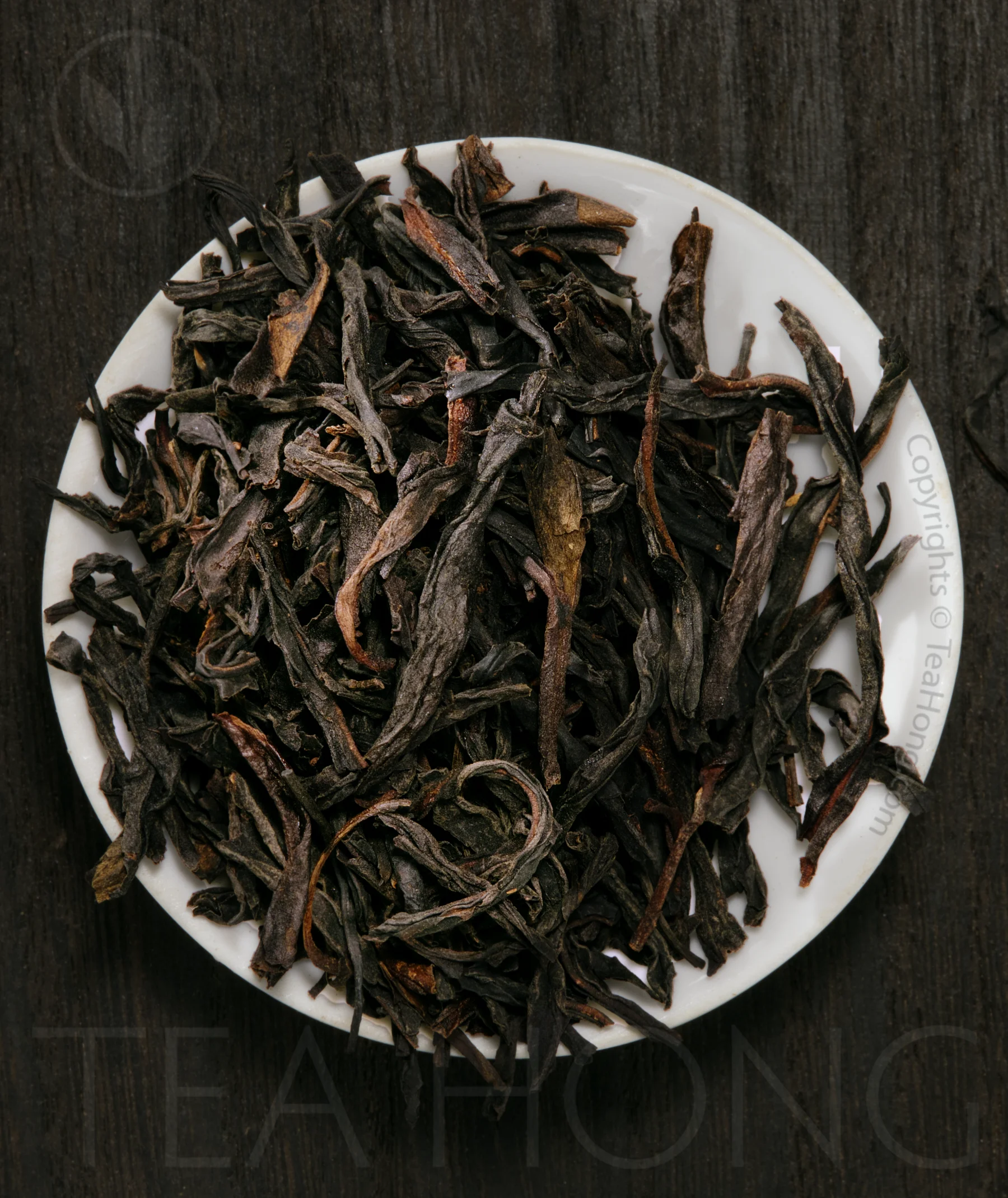
Phoenix Petioles 1988, matured leaf stalk oolong, 40 g
$39.2
$71.74
Taste profile Nose: Earthy, complexly intricate herbal aroma with a sweet undertone. Tints of dried citrus peels and fresh cut wood. Palate: Soft, smooth body with notes of Pu’er shu cha as well as matured Pu’er sheng maocha, on an undertone of matured and rebaked Phoenix oolong with sweet herbal accents. Finish: Cooling, refreshing, quenching aftertaste. Infusion tips This tea is very tolerant of irregularities in infusion parameters. It is therefore a good choice for situations when attention to brewing cannot be maintained. Simply add water when you find the liquor in the teapot too strong. It is rather like a Pu’er shu cha in this regards. That said, it is quite pleasurable to enjoy it even when infusing to an extra strength. Do blanch the leaves at least once before actual infusion. Better twice. Unlike in the kukicha where the twigs are pretty cut up, those in this tea are generally quite complete, and therefore will need longer time to get the contents steeped into the water. We consider the standard long infusion time of 6 minutes using 2g for each 100ml water works very well. The 5g for each 100ml water for 1 minute using a smaller vessel delivers fantastic result as well. We prefer using near boiling water in either way. You can also consider breaking the leaves and stalks and put them into an infuser or infusion bag to make a teabag. This way the infusion time needed can be greatly reduced and can render more taste in situation when the water temperature is not as ideal. Do break them down only before use to reduce unwanted oxidation on the leaves that will dramatically affect the quality and taste. Notes: Leaf stalk tea offers a taste unlike that of the leaf tea, simply because of a different biochemistry in the petiole compared with the leaf blade. The structure is a superhighway as well as a governing pivotal point between the plant and the leaf. Its makeup is vital to the plant’s healthy existence and is therefore created with a complex structure created with a host of materials, despite the deceivingly simple appearance. In recent years the medical science community are beginning to notice such teas and a few researches are done with encouraging results. In fact, teas made from the tea leaf stalks exist in many other categories outside of Phoenix oolongs. For example in Japan, there is kukicha, where the sorted out leaf stalks are blended with leaf tea for a different taste. There is a huge population of fans for different types of kukicha. In Old Hong Kong, there was Luk On Kwaat, which was made from the leaf stalks picked out from the half finished Tieguanyin sent from China, rebaked and aged to market as a kind of Pu’er tea. Recently we have seen on the web that there are poorly processed Phoenix oolongs sold in the name cha tou. Regardless of how a product is called, it is the quality of the original production that counts. The term cha tou originates from a southern Chinese language, Cantonese, from the daily term “tau tau mei mei” (頭頭尾尾). It is an old expression referring to odds and ends of things. Since Canton and later Hong Kong (where Cantonese is the major language as well) has been the major tea trading centres for centuries, quite a few specific terms have grown from this language. Although the major local dialect in Chaozhou (where Phoenix is) is Thiê-ziu, where the same term is pronounced as “thê-tao”. Because of the geographic proximity and close trade relationship through centuries, many terms used in two languages are very similar, only different in the phonetics.