Search Product
Our Categories
Your Cart

BEST SELLER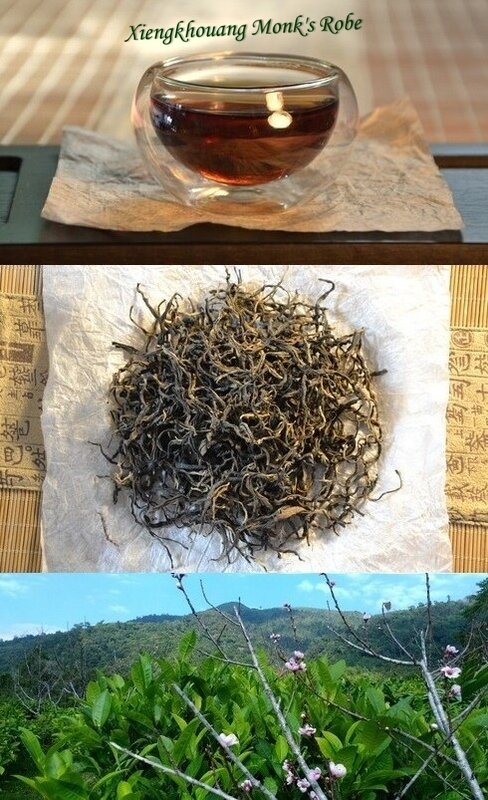






Xiengkhouang Monk’s Robe Black / Red Tee
Original price was: RM 59.00.RM 49.00Current price is: RM 49.00.Last 4 products before the end of the campaign.
CNC Aluminium Downlight Fixture Anti Glare Fixed Silver – AS828
Original price was: RM 199.00.Current price is: RM 179.00.Last 1 products before the end of the campaign.
24W 5ft T8 Premium LED Glass Tube
Original price was: RM 59.00.Current price is: RM 49.00.Last 1 products before the end of the campaign.
Aluminium Slim 27/28 Profiles – 2m
Original price was: RM 59.00.Current price is: RM 49.00.Last 2 products before the end of the campaign.
IEC GU10 Holder 036
Original price was: RM 49.00.Current price is: RM 39.00.Last 2 products before the end of the campaign.
500W Nano IP65 Floodlight
Original price was: RM 49.00.Current price is: RM 39.00.CNC Aluminium Downlight Fixture Fixed White – WN717
Original price was: RM 59.00.Current price is: RM 49.00.Last 5 products before the end of the campaign.
Description Kinnari’s ‚Monk’s Robe‘ – schwarzer („roter“) Tee aus Xiengkhouang, Laos “Monk’s Robe” – Black / Red Tea from Xiengkhouang, Laos (click picture to enlarge) Kurzinfo – Xiengkhouang Monk’s Robe Schwarzer Tee Type of tea: Black (Red) Tea Origin: Xiengkhouang, Laos Variety: native, large-leaf, seed-grown Picking standard: Handpicked 2 1 Processing: Trad. manual (artisan) processing – roasted rolled in a wok pan Taste & Aroma: multilayered, harmonious sweetness of honey and dried fig; wood, smoke and roast notes Cup color: clear, deep ruby Origin Like Myanmar, Vietnam, and northern Thailand, Laos belongs to the cradle regions of the tea tree. Its native populations are closely related to those of Yunnan. While Laos does not possess an unbroken national tea tradition like China, Japan, or Vietnam, the picking and processing of tea leaves reaches far back in history. The Xiengkhouang region in eastern Laos lies on an expansive high plateau. On Mount Phou San, trees of a large-leaf variety thrive, bearing voluminous, silvery buds. At elevations between 1200 and 1300 meters, the cool, humid climate and mineral-rich soils provide ideal conditions for tea cultivation. The forests of the Xiengkhouang Plateau are considered one of the last reservoirs of wild and semi-wild tea populations in Southeast Asia. In ancient times, it was customary here to harvest tea once a year for the Chinese emperor. Later, the old tea trees fell into obscurity. For centuries, only the local mountain peoples – the Hmong and other ethnic groups with roots stretching back to the Tibetan highlands – preserved the region’s tea tradition. It was only with more recent efforts to replace opium cultivation with other crops that this heritage once again drew new attention. (click map to enlarge) Picking and Processing The leaves of Xiengkhouang Monk’s Robe Black Tea are carefully picked according to the standard of “two leaves and a bud.” This precise method ensures that only the finest and healthiest leaves are selected for processing. While the processing follows the principles of a classic black tea, in Xiengkhouang it is still deeply rooted in traditional handcraft. The leaves are roasted and rolled in large wok pans, a practice that preserves both the centuries-old expertise of the local tea farmers and the high quality standards of Kinnari. The result is an authentic artisan tea of outstanding character. A striking feature of Monk’s Robe is the extraordinary size of its leaves and buds. Thanks to meticulous hand processing, they remain entirely intact. This large-leaf profile is typical of the native tea tree variety of the region. Comparable leaf sizes also show in other Kinnari teas from the same source, especially Xiengkhouang Honey Hill. Natural Cultivation in Biodiverse Environment Beyond its artisan processing, the character of Xiengkhouang Monk’s Robe is shaped by the natural environment in which the tea trees thrive. The gardens are nestled within a rich, biodiverse ecosystem that lends the plants both vitality and resilience. The planting of the cultivated bushes goes back to the early 2000s as part of a substitution program for opium cultivation. For this purpose, the farmers used seeds collected from several-hundred-year-old tea trees growing deep in the forests of the Xiengkhouang Plateau. As a result, today’s cultivated plants carry within them the genetic legacy of these ancient tea trees — a heritage that finds its way directly into our cups. A distinctive feature of these seed-propagated trees is their deep-reaching root system. It allows them to draw minerals and nutrients from lower soil layers, expressing the full richness of the terroir in their leaves. This natural origin reveals itself in the taste of the tea: complex, layered, and unmistakably tied to its homeland. .(click picture to enlarge) Tasting Notes – Appearance, Flavor and Aroma Even the ebony-colored dry leaves are an aesthetic delight. The large leaves and buds are carefully crafted, gently rolled into loose curls. At first glance, one can already sense the artisan skill that lies within this tea. The fragrance of the dry leaf carries through into the infusion. Its aroma recalls the layered scent of damp forest soil after a summer rain. Alongside it unfold the sweetness of wild honey and delicate hints of dried figs. These impressions receive even more depth by the presence of well-aged wood, harmoniously rounded off with gentle touches of smoke and roast. .(Bild klicken zum Vergrößern) Preparation As with other high-quality whole-leaf black teas, there are are 2 basic ways of preparing Xiengkhouang Monk’s Robe Black Tea. In both cases, freshly boiled water that has just settled is the best choice. The so-called “Western method” focuses on one or two highly aromatic and flavor-intensive infusions. The first can steep for 3–5 minutes, while the second may extend beyond 5 minutes, depending on personal preference. A dosage of about 3–4 g of tea leaves per 100 ml of water proves well balanced. As opposed to this, the “Gong Fu” method consists in the successive preparation of several comparatively short infusions. A slightly higher dosage than in the Western method helps bring out the subtle layers of flavor in each steeping. For the first infusion, a steeping time of less than one minute is recommendable. This highlights the fragrance of the tea and is therefore called the “infusion of good fragrance” in China. Each following infusion should steep a little longer. In this way, four to five cups unfold, each with its own distinctive profile. Kinnari Tea – Ecological and Social Responsibility Tea is the greatest passion of Anna and Thun, the German/Laotian operators of Kinnari Tea in Laos. This is why quality for Kinnari Tea means more than just a good leaf grade, even a lot more. Beyond the obvious properties of the tea leaf, acting responsible regarding our natural and social environment is a cornerstone of Kinnari’s quality concept. At this, goal is the highest achievable level of harmony between the company’s economic activities and all stakeholders’ interests, including nature. Hence, paying fair prices to the actual producers in Xinghkhouang and Bolaven is only ONE manifestation of Kinnari’s quality philosophy. Beyond this, Kinnari teas come only from tea trees raised from from the seed and grown naturally. Further, Kinnari emphasizes that these tea trees grow in their natural, biodiverse environment. With this, a no-pesticides, no artificial fertilizers and no hazardous substances policy is just a mattter of course. For detailed information about the history, background and philosphy of Kinnari Tea, please read my pertaining article in Siam Tea Blog: Laos, Kinnari Tea – Handpicked and Processed Arbor Teas from Biodiverse Cultivation Xiengkhouang – Reservoir of Wild Ancient Tea Trees in Eastern Laos Xiengkhouang is a province in the east of Laos, not far from the border to Vietnam. Apart from the stunning landscape, what makes the mountainous region with altitudes up to 2500 meters so interesting is its wealth of ancient tea trees. In Xiengkhouang, these have been growing and propagating the natural way through their seed from time immemorial. This way, “tea gardens” have emerged that are rather reminiscent of biotopes than of agricultural production land. The tea plants greatly benefit from the harmonious interaction of numerous types of plants, animals and insects populating their habitat. Other than with “clones” (raised from cutoffs), the roots of tea trees raised from the seed reach meters deep into the soil. This way, the plants enjoy the full natural input from their terroir. To this adds the balance prevailing in an ecosystem, paying respect to the “existential interests” of all its stakeholders. As a result, the need for artificial fertilizing and means of pest control. Unlike the bordering Vietnam – or China – Laos does not have a national tea culture in the proper sense. Nevertheless, the picking and processing of the native tea trees’ leaves are an integral part of the local mountain tribes’ tradition. Reconciling this tradition with highest quality, environmental and social standards and complementing it with a high level of professional competence is the secret of Kinnari Te Related