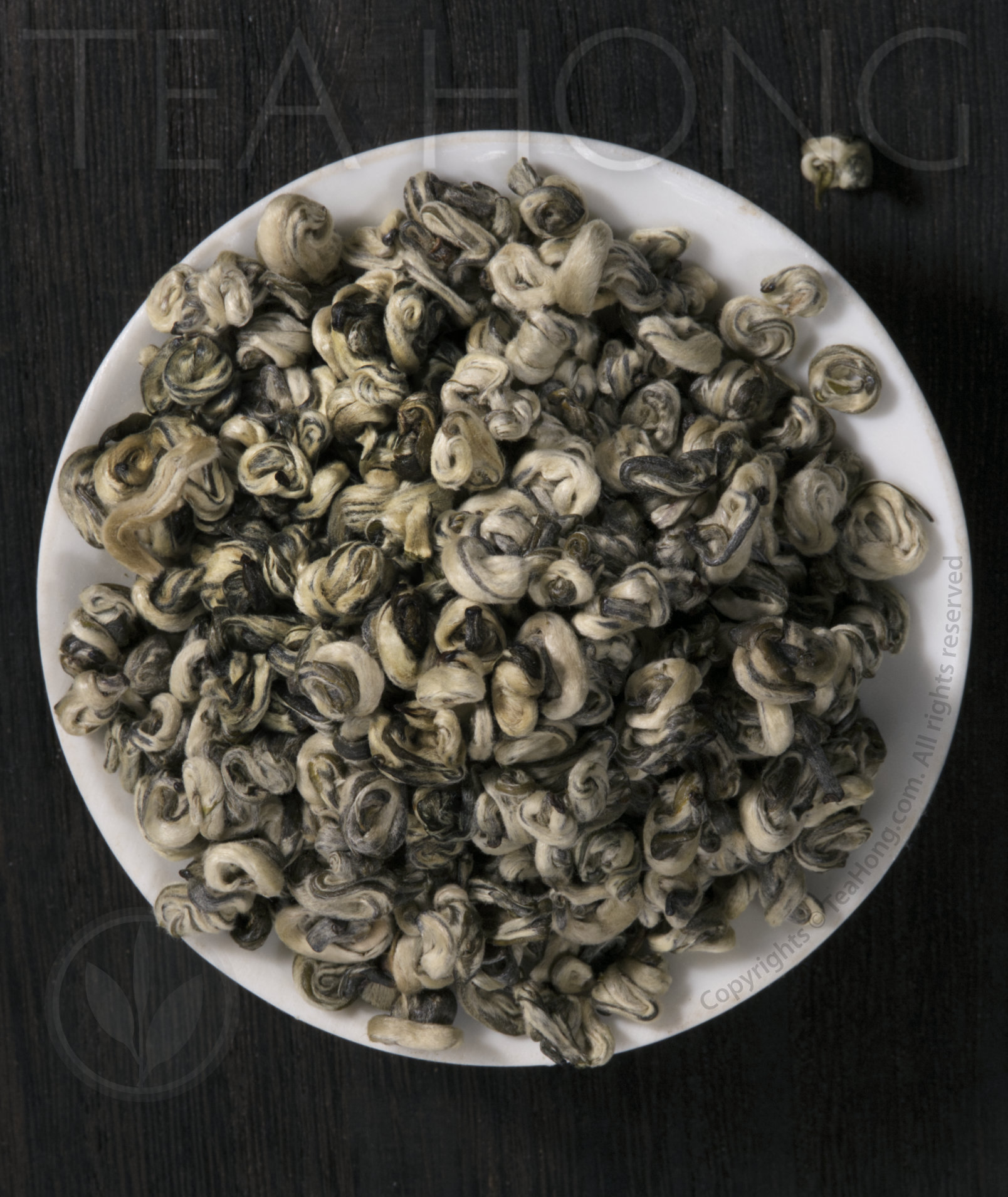
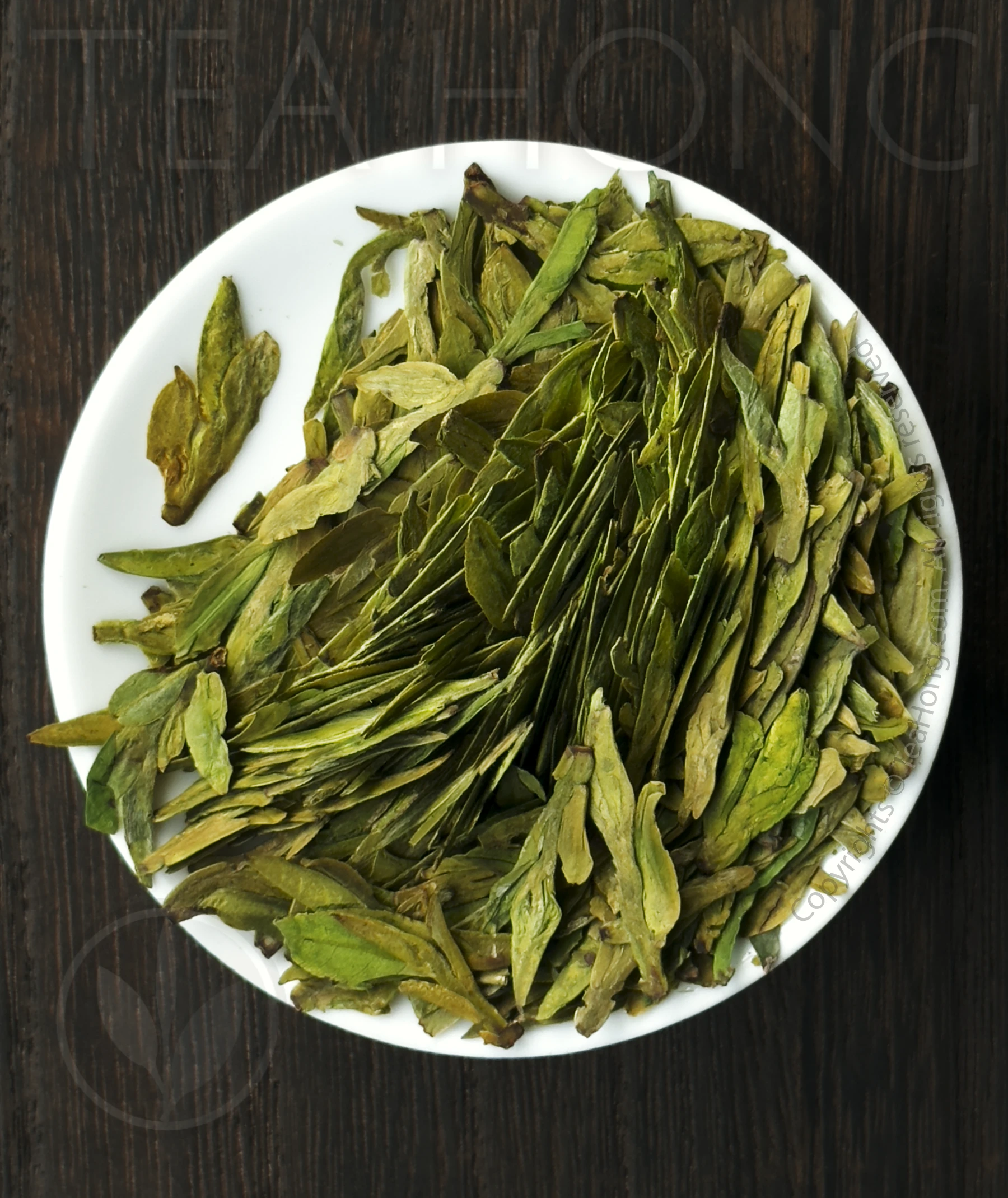
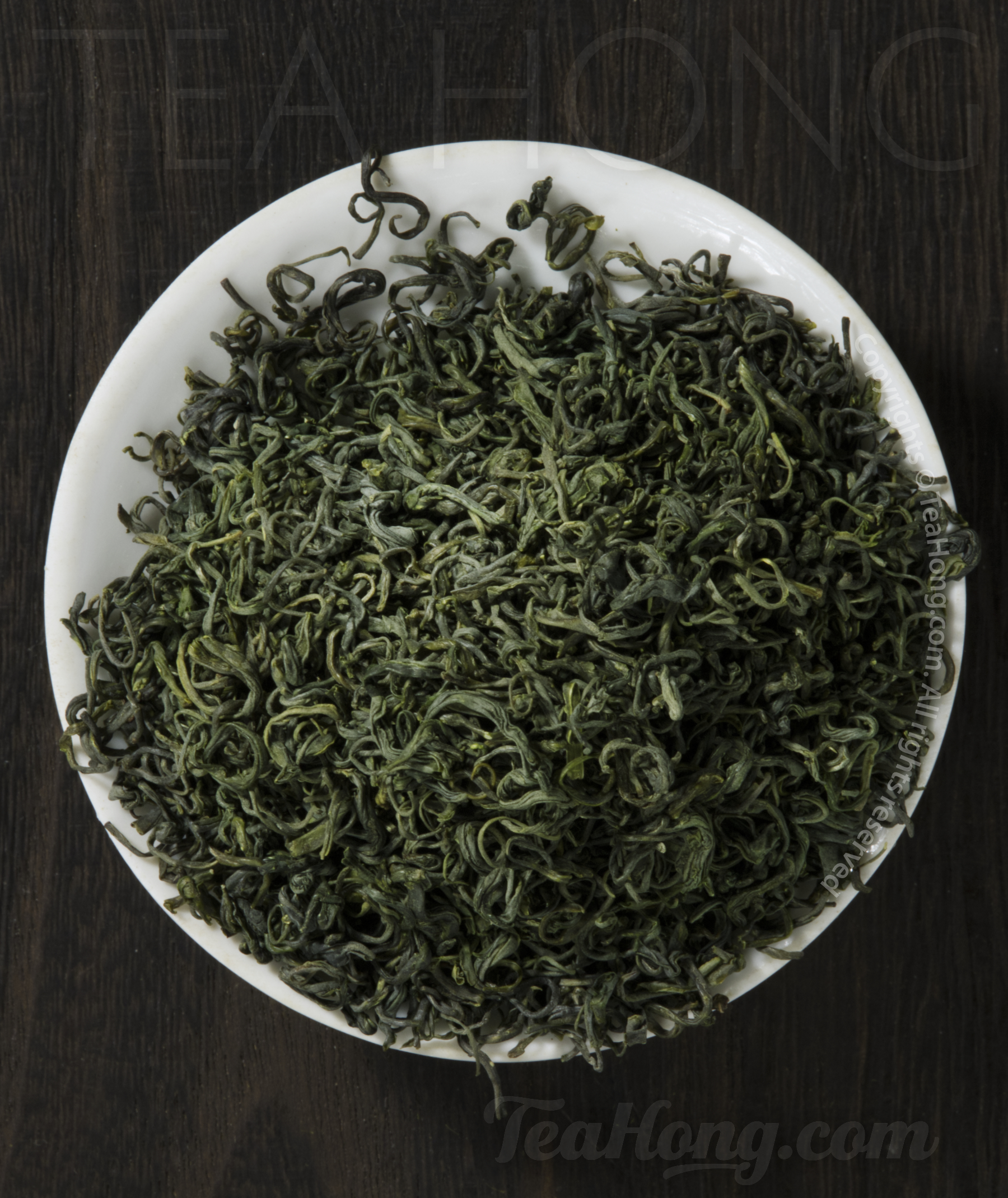
Longjing Traditional Supreme, hand-roasted green tea, 40 g / 70 g
$41.3
$68.15
Proper roasting is key Wok roasting in Longjing green tea production Tea Hong’s Longjing Traditional Supreme is produced from the first flush of the ancient local cultivar rather than the recently developed ones. It grows less speedily, yields less, and needs more horticultural attention, but gives you a lot more tastes. The fresh plucks are shade-withered and then roasted briefly at between 85°C to 95°C before resting for about an hour for auto-rehydration. They are then roasted at around 70°C repeatedly, while being pressed against the wok to finally take on the very flat form that this tea is known for. By hand all the way. Many tea masters prefer actually the bare hand for achieving the desired result. The flattening of the leaves is intended not for the look, but for the flavour. Gradual squeezing forces the leaf juice out in direct contact with the heat. The 200 compounds are then roasted to the super rich umami and aromatic taste profile that made this tea famous centuries ago. <read full article here> Taste profile Nose: Warm, buttery aroma on an undertone of toasted nuts, cereal and peas, accented with sea salt and light woody spice. Distinct, but pleasantly gentle floral aroma of blooming orchard with an herbal undertone. Palate: Lively body with a good weight and silky to velvety tactility, dependent on your water quality and infusion strength. Malty savouriness in very good length with light bites of salt, chocolate and cinnamon, changing to sweet and refreshing. Finish: Umami, then sweet and then quenching aftertaste. Infusion tips To experience its full tantalizing taste profile, steep the leaves in a well pre-heated high density Yixing pot between 160 ~200 ml at 75~80°C at 3 g of leaves to 200 ml of water for 5 minutes. Increase to 2g to 100ml ratio when you prefer a stronger taste. The best way to actualize the taste profile of this tea is with the use of water from a good but low mineral mountain spring. If a fine yixing pot is unavailable, a well formed porcelain gaiwan or even the taster mug gives satifying results. This tea can also be infused very lightly too, like most other people do, at 0.5g ~ 1g to each 100ml water for 30 seconds or various duration according to personal preference. Use higher temperature water in this case, such as 90°C. *Note: If you ever tour Hangzhou where Longjing originated, you might have seen many people roasting the tea on the street in touristy areas, including those so called wholesale markets. Most are basically street vendors acting the process. The products have been previously roasted and are almost always average quality but sold at a premium price. Tea tourist scam is a big business in China, so much so that even tea dealers in the West are often victims without knowing it.